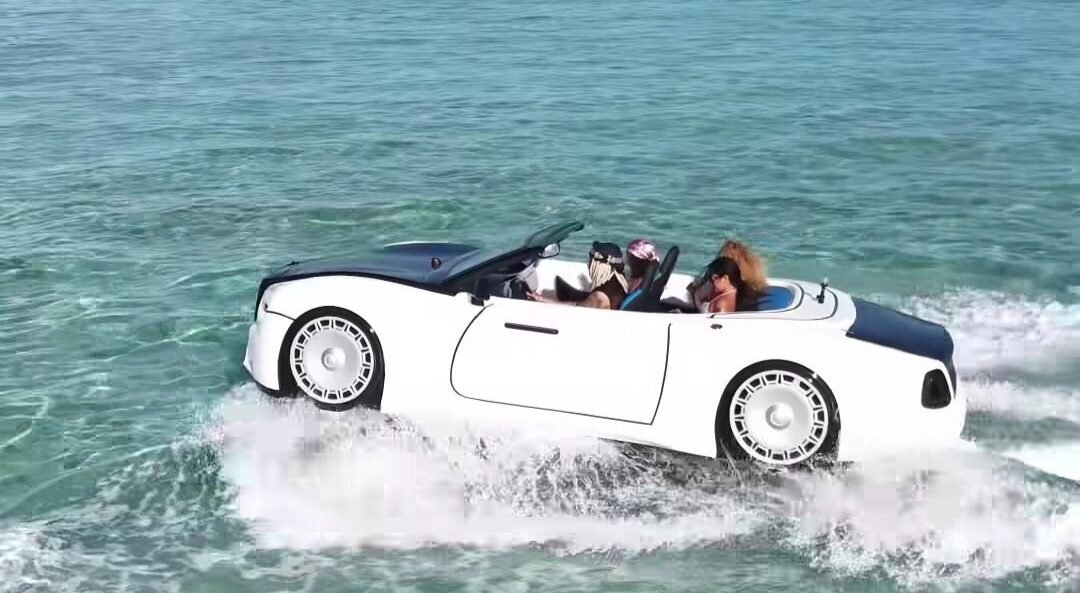
Get ready for an unforgettable ride with the Water Boat Car, a truly remarkable type of travel! This fantastic creation seamlessly blends the fun of a car with the freedom of a boat, allowing you to navigate both land and water with grace. Imagine gliding across a ocean one minute, and then rolling down a street the next! The Water Boat Car offers a fresh angle on recreational activities and promises hours of joy for the whole crew. It’s the ideal solution to merge your love for both automobiles and the sea!
Revolutionizing Water Transportation
The emergence of hydro-powered vehicles is poised to dramatically change the landscape of aquatic mobility . These innovative machines, utilizing water propulsion , present a fresh approach for navigating waterways. Forget typical watercraft; jet cars provide a swifter and potentially more efficient solution for individual movement across bodies of water, heralding a genuine revolution in how we view aquatic transit.
Examining Water Craft Technology
The cutting-edge area of water jet car innovation presents a captivating glimpse into the possibility of travel . Engineers are actively perfecting systems that employ powerful liquid jets for thrust, enabling these unique devices to glide across bodies of seas. Innovative progress focus on enhancing performance , reducing planetary footprint , and expanding the usability of this exciting idea .
The Future of Water Travel: Jet Car Design Trends
The developing landscape of water travel is seeing remarkable shifts, particularly concerning jet car style. We're witnessing a move away from classic bulky designs toward sleek and green alternatives. Multiple key developments are dictating the future of these high-speed vessels. These include:
- Hydrodynamic Optimization: Specialists are increasingly focusing on minimizing drag and enhancing hydrodynamic performance through advanced hull forms. Expect to see more nature-inspired designs – mimicking marine life for outstanding movement.
- Electric Propulsion: The growing concern for planetary impact is promoting a rapid adoption of electric motors. This contributes to silent operation and reduced emissions.
- Lightweight Materials: Carbon fiber are becoming conventional metals, causing in nimble and more fuel-efficient jet vehicles.
- Modular Design: Adaptability is key. We're likely to see more modular configurations allowing for modification and easy component substitution.
The general aim is to create jet cars that are not only exciting to ride but also responsible for the world. This indicates a promising horizon for water travel.
Discover the Thrust Machine Builders Revolutionizing the Field
Several pioneering firms are currently leading the charge in jet transportation technology. Including these, Bloodhound LSR is prominent for its legendary achievements, while fresh entrants like Apex Dynamics are pushing boundaries with hybrid propulsion systems. Additionally , companies focused on miniaturization and retail applications, such as Aero Mobility , are steadily appearing the landscape, suggesting a future where jet-powered travel becomes more commonplace .
Choosing a Aquatic Craft vs. Jet Machine : Which is Suitable for Your Needs ?
So, you want to get a fast watercraft , but are debating between a standard water craft and a advanced jet car ? Both offer a special ride on the surface, but they appeal to diverse requirements. Water vessels are typically often predictable , enabling them better for beginners or people wanting a calm journey. They can manage choppier waves effectively. On the other hand , jet vehicles shine at extreme velocities , delivering an adrenaline-fueled performance . Yet, they require more practice to control properly and can be often forgiving in rough water . Ultimately , the perfect selection relies on your spending limit, skill level , and intended purpose .
- Think about your resources.
- Assess your skill level .
- Consider the advantages and cons of each kind .
Extreme Excitement : A Deep Dive into Rocket Automobile Execution
The amazing world of jet automobile capability offers a distinct experience, pushing the boundaries of pace and design. These powerful machines aren’t your common vehicles; they utilize jet propulsion, delivering incredible acceleration and peak speeds often exceeding 300 miles per hour. A sophisticated interplay of aerodynamics, powerplant design, and components science permits these creations to achieve such phenomenal feats, demanding skilled operation and a specialized environment for safe use.
Luxury on Water: The Rise of the Water Boat Car
The emerging trend of water boat cars, also known as hydrofoils that combine automobile aesthetics with aquatic functionality, is quickly attracting interest. These innovative vehicles offer a high-end ride, allowing owners to easily transition from pavement to sea. The increasing demand reflects a desire for bespoke travel options, catering to a high-net-worth clientele seeking the peak in individual indulgence.
An Exclusive Peek Inside a Jet Car Designer’s Workshop
Few enthusiasts ever receive access to the inner world of a jet car workshop, and we’re delighted to present an rare look. Within our facility, experienced craftspeople meticulously assemble these powerful machines. You’ll witness firsthand the complex process, from the early design phases to the final testing. Features include:
- The state-of-the-art engine assembly area
- A meticulously organized parts depot
- An dedicated space for chassis building
- Views of some revolutionary construction techniques
It’s the truly remarkable experience that showcases the passion and precision required to create these exceptional creations.
Water Jet Car Safety: Concerns and Best Practices
The emerging technology of water jet driven cars raises unique challenges regarding security. Significant concerns revolve around the potential for failures in the pumping system, leading Sports Car on Water to erratic movement or total loss of direction. In addition, the force of the water itself represents a danger to people and nearby objects. Best procedures include rigorous system testing, comprehensive operator education on emergency protocols, the use of backup systems to mitigate failures, and clearly defined operational zones with appropriate fences.
A Environmental Impact of Jet Craft and Jet Craft
Increasingly prevalent types of leisure, water boats and water craft, present significant issues regarding their environmental footprint. The vehicles, powered by robust engines, often emit harmful emissions into the atmosphere, contributing to climate pollution. In addition, the wash generated by the machines can cause erosion to coastal areas and impact aquatic environments. Efforts are needed to promote more approaches and careful operating methods to lessen their overall ecological damage.
Hydro Vessel Car & Jet Car: A Hobbyist's Manual
These distinct boats – often known as water cars or jet cars – represent a fascinating niche in the hobbyist's world. First designed for marine movement, these innovative vehicles combine the principles of automotive and maritime engineering. Finding a well-maintained example can be challenging, requiring thorough investigation into their history and technical specifics. Prices differ significantly depending on condition, rarity, and provenance, making it a focused area for serious enthusiasts.